
Livingston County Multi-Day Arrest Reports
Start with the Livingston County Sheriff news archive. Think of it as a rolling set of chosen story releases, not a jail ledger. There is no guaranteed seven-day feed. No fixed posting schedule exists. When the agency publishes, an entry may name the person, alleged charges, municipality, arresting unit, arraignment result, and remand or release details. The archive never promises that every arrest appears. A gap means nothing by itself.
A multi-day review still pays off. A release can surface days after the event or after a weekend. Always read the event date and arrest date inside each story. The web-post date is not the booking time. The Livingston County Jail may handle central booking and LC-CAP arraignment. But the underlying report can belong to the Village of Geneseo Police, Village of Avon Police, New York State Police, SUNY Geneseo University Police, or another agency.
Reading Livingston County's Wider Record
Move from official material outward. The Sheriff archive is selective, so track agency, incident date, arrest date, and court action separately. For time-sensitive searches, the site's Arrested Today page covers the same-day fallback.
- Open the Sheriff news archive and scan backward by publication date.
- Open a likely release and note the named arresting agency, municipality, event date, arrest date, charges, and stated LC-CAP or court action.
- Confirm that the item concerns Livingston County, New York, since similarly named counties elsewhere produce misleading search results.
- If the arresting agency is municipal, campus, or state police, contact that agency for its incident or arrest report.
- For Sheriff-held records, use the county FOIL form and give a narrow date range, name, municipality, and exact record requested.
- Use the originating court or County Clerk for the later disposition, because a release records charges rather than the final result.
Note: Offender Watch, county emergency alerts, and the SUNY campus crime log are not substitutes for a county booking ledger.
Fields in Livingston County Arrest Releases
The Sheriff writes narratives rather than filling in a standard booking screen. Official releases may offer some fields but never all of them.
| Field | How to read it |
|---|---|
| Name | An identification attributed to the release. |
| Agency and place | The unit involved and municipality; neither necessarily identifies residence or present custody. |
| Dates | Incident, arrest, processing, and publication dates can differ. Exact booking time is not a standard public field. |
| Charges | Alleged Penal Law or Vehicle and Traffic Law counts as stated when booked. |
| Arraignment or release | A snapshot such as LC-CAP action, remand, bail, or release, which may later change. |
| Photo | Selective story use only. No systematic official booking-photo roster or public photo policy was found. |
| Disposition | Usually absent; obtain it from the court, CHRS where applicable, or a certificate of disposition. |
Never infer booking numbers, NYSID values, DINs, exact intake times, or full bond histories. A DIN belongs to the state DOCCS system, not a county booking.
Weekend Posting Is Not a Booking Clock
No official statement says Livingston County batches posts on a set weekday or weekend schedule. That silence matters. A Monday cluster in the archive may reflect editorial timing. Or it may reflect investigations hitting a release point. Delayed publication is another cause. Calling it a weekend surge in arrests would be a guess.
After a weekend event, start with the agency and the date. Don't wait for a blog entry. Sheriff Records holds Sheriff arrest and case material. A village or campus department keeps its own report. Corrections staff can answer jail questions. A press release is never a live custody answer. In an emergency, call emergency services instead of searching records.
Livingston County Arrest Archives
A post's age online has nothing to do with the government's retention duty. New York's Public Safety retention schedule calls for a permanent master summary. It covers prisoner commitments and discharges. It keeps prisoner data and case files for fifteen years after death or discharge. Separate schedules cover arrest identification files, warrants, and booking-processing recordings. None of that promises online access or open disclosure.
For older Sheriff material, send the official Sheriff FOIL form to the Records Division. Name the person and the date range. Add the agency, the municipality, and the record series you want. Most copies carry a charge. The form lists no booking-photo fee or guaranteed turnaround. Ask for the current estimate. If an item is withheld, the response should state the basis and the appeal route.
Court outcomes belong to the County Clerk or the handling court. For historic news, the County Historian's newspaper holdings include Livingston County News from 1989 to the present. A 2007 gap is noted. Retention never equals publication. A kept record can be sealed, restricted, offline, or held by another custodian.
Weekly Arrest and Court Coverage
Livingston County News is the strongest recurring secondary source. Its weekly "Arrests & Courts" section can include Sheriff and Geneseo Police items. It is editorial coverage, not an official feed. Publication dates, story selection, and occasional supplied images should not be mistaken for a complete booking-photo policy.
The Genesee Country Express archive on NewsBank offers another historical route, though it may require a subscription or library access. The site lists no dedicated live arrest section. The archive's entry point displays the available historical pages.
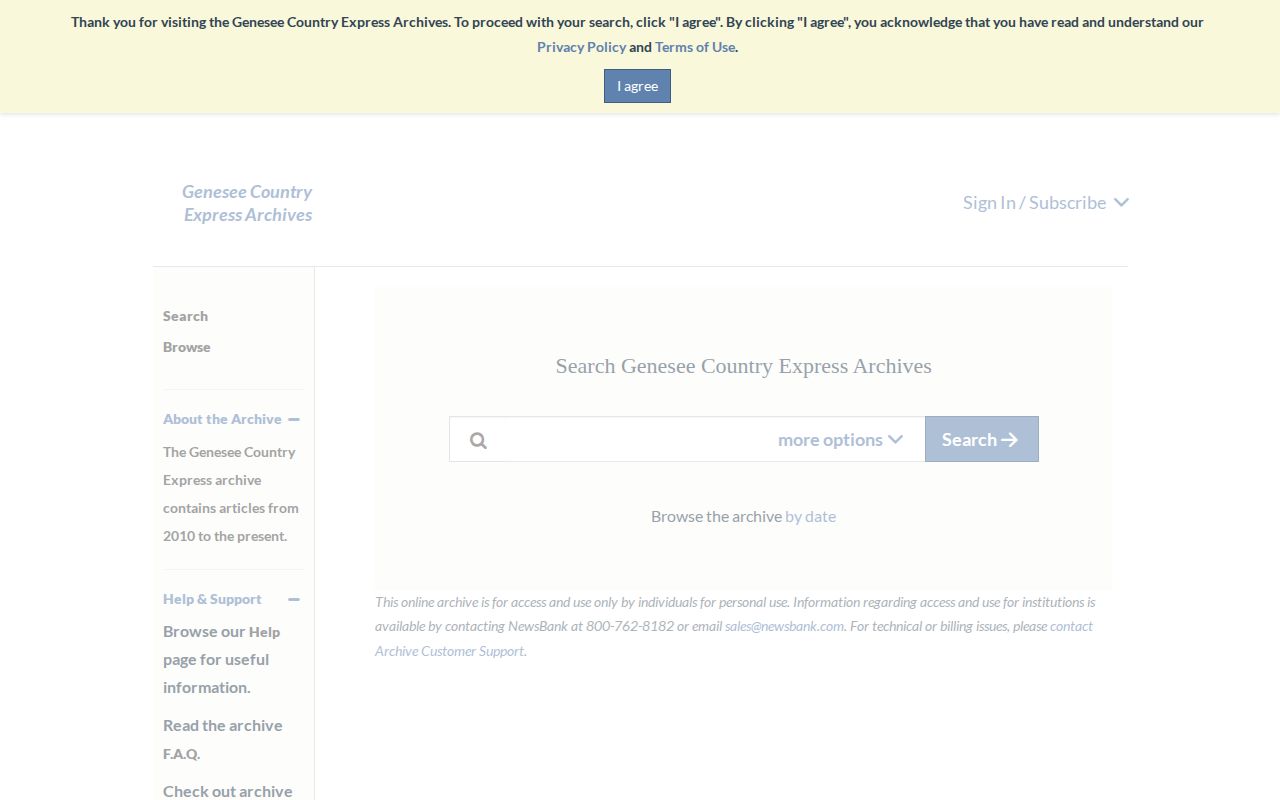
The archive can help you find a dated story. It cannot establish present custody or a complete county arrest report.
Official Records Before Secondary Pages
The official Sheriff archive comes first online. This Sheriff news archive page shows its narrative, item-by-item format.
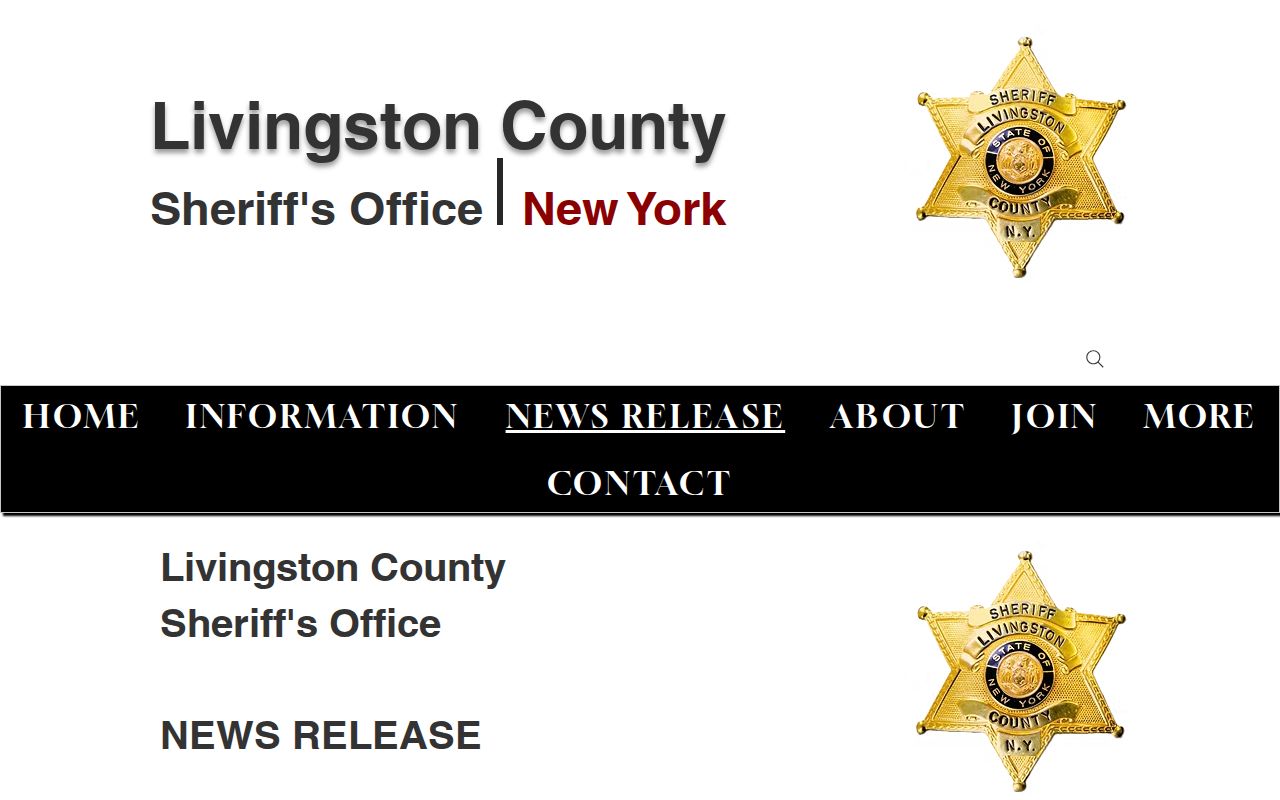
Those stories carry useful detail. The archive never claims to be a complete roster or fixed-window report.
A county-level Mugshots.com page also exists as a secondary address. Its local content returned a cache miss. The page displays what a visitor encounters there.
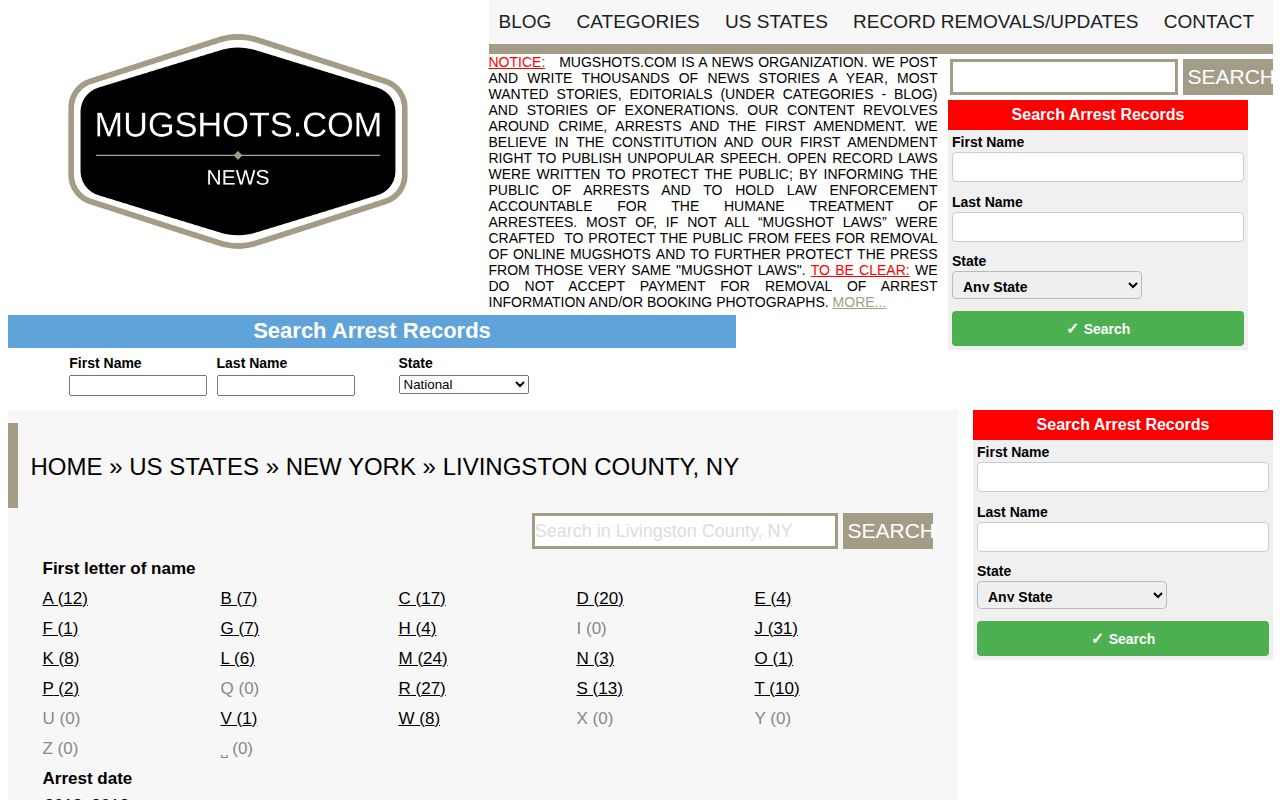
Treat that site as unofficial. It may be stale or incomplete, so never treat it as proof of current custody or full county coverage.
Livingston County Enforcement Data
Livingston County puts out two very different kinds of information. Mixing them causes trouble. The 2024 annual report totals selected Police Services categories. Drug activity, impaired driving, and other enforcement work each get a yearly count. Those figures describe what the agency did all year. They are not bookings. They were never meant to be. Pairing them with news stories will not produce a real Livingston County arrest total either. A handful of headlines shows which incidents the Sheriff's Office chose to explain publicly. It says nothing about whether arrests rose or dipped from one week to the next. A real trend needs one fixed period, one consistent measure, and the agency's own numbers. A blotter is for finding events. It is not for guessing crime rates.